- What it is: the conformance validator of 3GPP TS 26.265 (Video Capabilities and Operation Points, V19.2.0, Release 19), annex B.2.3. It checks whether an AVC or HEVC bitstream conforms to a video operation point.
- What it covers: the seven operation points of TS 26.265, from AVC HD to MV-HEVC stereo.
- What it is not: an encoder or decoder. It tests bitstreams that encoders produce.
- Status: under development. Every operation point is implemented; each still needs testing with its conformance bitstreams.
What it does
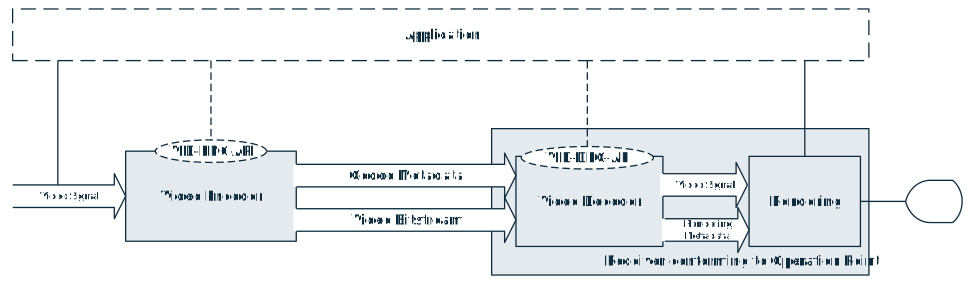
TS 26.265 defines service-independent video operation points and capabilities, which 3GPP service specifications and third-party services may reference. An operation point combines a video coding format with a video representation format, and a receiver conforming to it can decode the bitstream and render its video signal.
Where the validator fits
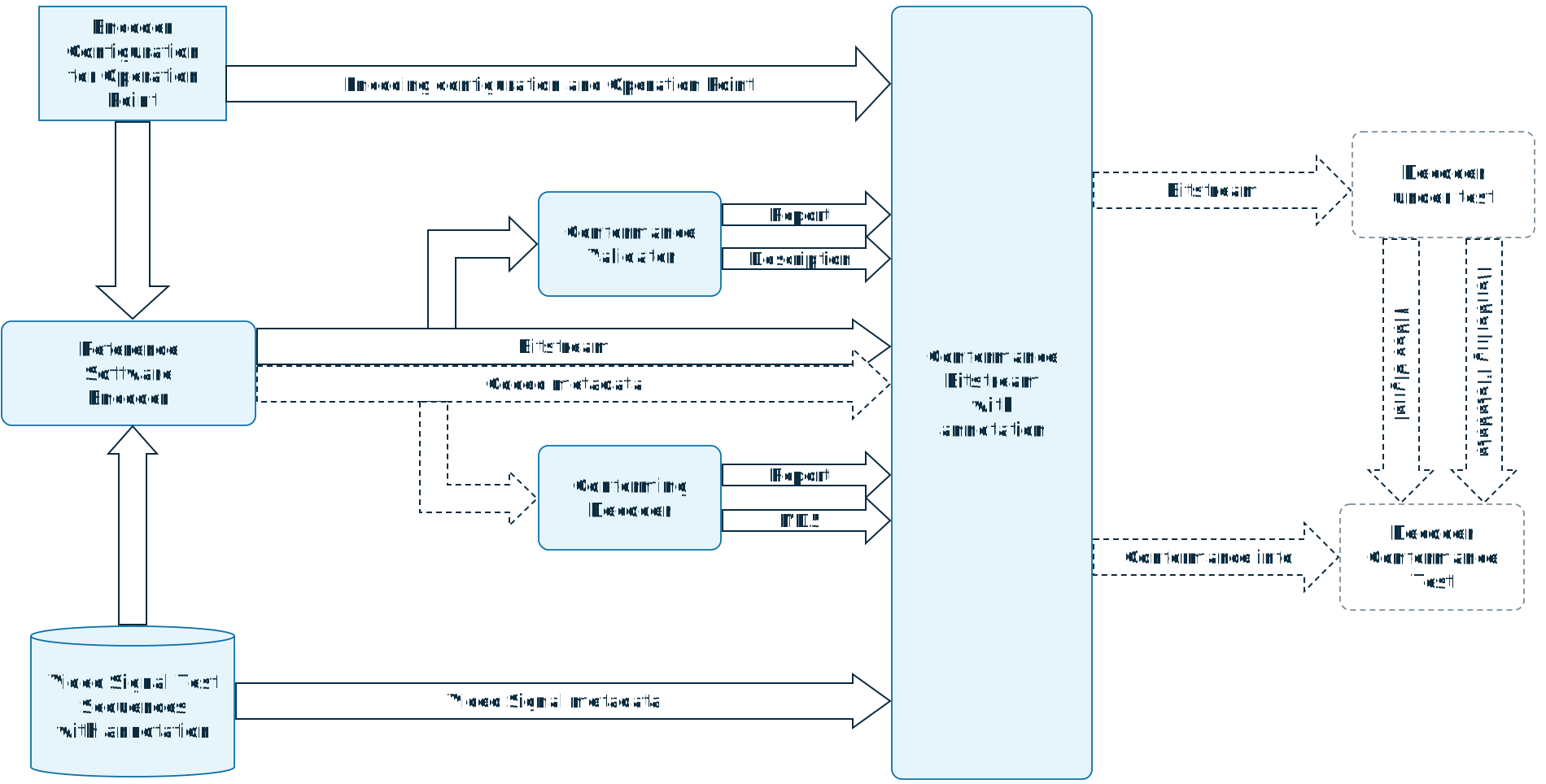
TS 26.265 annex B provides a set of conformance functions: annotated video test signals, reference encoders and configurations, a conformance validator, conforming decoders, and conformance bitstreams. The validator tests whether a bitstream claiming to conform to an operation point does, and if not, which test assertions fail. This testbed is that validator.
Operation points
The operation points of TS 26.265 (table 6.1-1), and how the validator names them.
| Operation point | Bitstream | Video format | In the validator |
|---|---|---|---|
| 3GPP-AVC-HD | AVC High Progressive Profile, Level 4.0 | 3GPP-HD | 3GPP-AVC-HD |
| 3GPP-HEVC-HD | HEVC Main 10 Profile, Main Tier, Level 4.1 | 3GPP-HD | 3GPP-HEVC-HD |
| 3GPP-HEVC-HD-HDR | HEVC Main 10 Profile, Main Tier, Level 4.1 | 3GPP-HDR | 3GPP-HEVC-HDR |
| 3GPP-HEVC-UHD-HDR | HEVC Main 10 Profile, Main Tier, Level 5.1 | 3GPP-HDR | 3GPP-HEVC-UHD, 3GPP-HEVC-UHD-HDR |
| 3GPP-HEVC-Stereo | HEVC Main 10 Profile, Main Tier, Level 5.2, frame packed | 3GPP-Stereo | 3GPP-HEVC-Stereo |
| 3GPP-MV-HEVC-Main-Stereo | MV-HEVC, two layers | 3GPP-Stereo | 3GPP-MV-HEVC-Main-Stereo |
| 3GPP-MV-HEVC-Ext-Stereo | MV-HEVC, two layers | 3GPP-Stereo | 3GPP-MV-HEVC-Ext-Stereo |
TS 26.265 itself also uses "3GPP-HEVC-HDR" and "3GPP-HEVC-UHD" in its clause text for the HDR and UHD operation points.
How it works
The validator parses the bitstream into an XML description of its NAL units and parameters, then checks that description against XSD 1.1 schemas, one set per operation point, and reports every passing and failing assertion. A "shall" requirement that fails is reported as an error, a "should" as a warning.
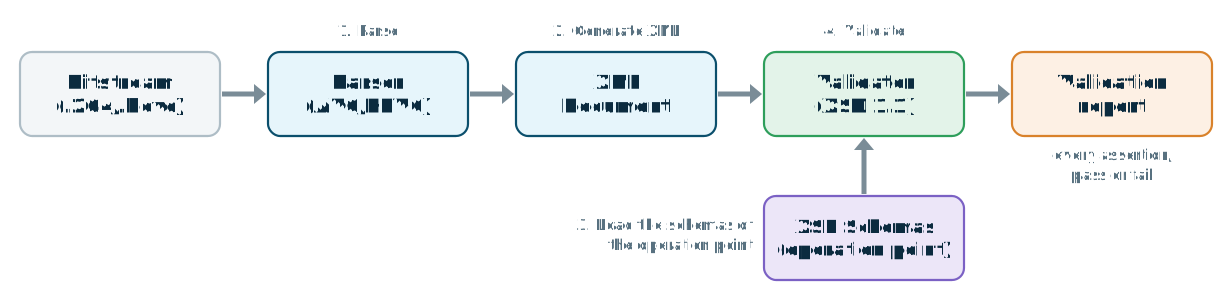
TS 26.265 leaves the semantics and format of the validator report for further study, so the JSON report is the tool's own.
Run it
cd ~
git clone https://github.com/5G-MAG/vops-conformance-validator.git
cd vops-conformance-validator
python -m pip install -r requirements.txt
Validate a bitstream against an operation point, with a JSON report:
# Validate bitstream against predefined operation point with JSON report
$ python -m sa4_bitstream_validator validate bitstream_path 3GPP-MV-HEVC-Main-Stereo --report report.json
dump writes the XML description of a bitstream, and check tests a description against one or more schemas. config.yaml maps each operation point to its schemas in bitstream_rules/. The repository README lists every option.
Repositories
Detailed repository metadata is not curated for this project yet, see the repository list above.
| Area | Details |
|---|---|
| Scope | What the validator covers and its operation points: Scope |
| Tutorials | Install and run it: Tutorials |
| Resources | Repository and releases: Resources |
| Technical documentation | Video Operation Points on the Tech portal |
| Standards | Video Operation Points on the Standards portal |
See Standards: VOPS Conformance Validator for the specification.
Sources for this page
- At a glance and What it does: TS 26.265 V19.2.0, Introduction, clause 4.2 (Operation Point, Conforming Receiver) and annex B.2.3.
- Where the validator fits: TS 26.265 V19.2.0, annex B.1 and B.3.
- Operation points: TS 26.265 V19.2.0, table 6.1-1, clauses 6.2.2.2, 6.3.2.2 to 6.3.5.2, 6.3.6 and 6.3.4.3; validator names from the repository README.
- How it works: the repository README (including the pipeline figure); TS 26.265 V19.2.0, annex B.2.3.
- Figures: redrawn from TS 26.265 V19.2.0, figures 4.2-1 and B.1-1.
- Status: the repository README (status badge and operation point table).