- What it is: protocols that deliver files and media objects in one direction, from a single sender to any number of receivers, over UDP/IP: FLUTE and ROUTE. CMMF is a container for coded media that such protocols can carry.
- FLUTE: built on ALC, which combines the LCT, congestion control and FEC building blocks. FLUTE adds the File Delivery Table (FDT), sent in band, that describes each file. Version 1 is RFC 3926, the version 3GPP refers to; version 2 is RFC 6726.
- Three FLUTE profiles: unprofiled FLUTE, as the IETF defines it; MBMS download (TS 26.346); and the MBS Object Distribution Method (TS 26.517), which conforms to the MBMS Download Profile with additional requirements.
- ROUTE and CMMF: ROUTE (RFC 9223) delivers objects with real-time constraints; CMMF (ETSI TS 103 973) carries coded representations of media from several sources. Each has its own page.
Why one-way delivery
FLUTE is a protocol for the unidirectional delivery of files over the Internet, particularly suited to multicast networks. It builds on Asynchronous Layered Coding (ALC), the base protocol designed for massively scalable multicast distribution.
ALC provides congestion controlled, reliable, asynchronous delivery of content to an unlimited number of concurrent receivers from a single sender. Its reliability comes from the Forward Error Correction (FEC) building block.
Some networks are not amenable to congestion control. For a satellite or wireless network, there may be no way for receivers to reduce their reception rate, since a fixed transmission rate may be allocated to the session. MBMS download delivery is such an environment, and does not use congestion control.
The building blocks
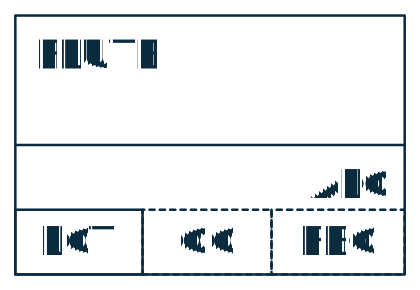
- LCT (Layered Coding Transport): gives ALC its in-band session management. Each packet carries a Transport Session Identifier (TSI) and a Transport Object Identifier (TOI).
- CC (congestion control): a building block that ALC combines with the others. MBMS download does not use it.
- FEC (Forward Error Correction): gives ALC its reliability. The FEC building block allows the choice of an FEC code, including the no-code FEC code that sends the original data with no coding.
- ALC (Asynchronous Layered Coding): the protocol instantiation that combines the three. It is under-specified and transports binary objects of finite or indeterminate length.
- FLUTE (File Delivery over Unidirectional Transport): a fully specified protocol to transport files. It uses special-purpose objects, the File Delivery Table (FDT) Instances, to provide a running index of files and their essential reception parameters in band.
FLUTE is carried over UDP/IP, and is independent of the IP version and of the underlying link layers.
FLUTE version 1 and version 2
- Version 1 is RFC 3926, an Experimental RFC of October 2004. It uses ALC as RFC 3450 specifies it and LCT as RFC 3451 specifies it.
- Version 2 is RFC 6726, a Standards Track RFC of November 2012 that obsoletes RFC 3926. It uses ALC (RFC 5775) and LCT (RFC 5651), and is not backwards compatible with version 1: for instance, the T and R fields of the LCT header changed meaning between RFC 3451 and RFC 5651.
TS 26.346 and TS 26.517 both refer to RFC 3926. The three profiles below are therefore defined on FLUTE version 1.
The three FLUTE profiles
| Profile | Defined in | Sender and receiver | What it is |
|---|---|---|---|
| Unprofiled FLUTE | RFC 3926, with RFC 3450 and RFC 3451 | Any FLUTE sender and receiver | FLUTE as the IETF defines it, with no 3GPP constraints |
| MBMS download | TS 26.346 clause 7.2, and the MBMS Download Profile of annex L.4 | BM-SC and MBMS Client | MBMS clients and servers implement RFC 3926 with the ALC and LCT features FLUTE inherits, plus several optional and extended aspects of FLUTE. The MBMS Download Profile then sets the required, expected and permitted usage of the FDT attributes and elements. |
| MBS Object Distribution | TS 26.517 clause 6.2 | MBSTF and MBS Client | When FLUTE realises the Object Distribution Method, the MBS Distribution Session conforms to the MBMS Download Profile of TS 26.346 annex L.4, with the additional requirements of TS 26.517 clause 6.2 |
Only one of the three has a name in the specifications: the MBMS Download Profile. "Unprofiled FLUTE" and "MBS Object Distribution" are the names this site uses for the other two. The Features page compares the three, row by row.
ROUTE and CMMF
- ROUTE (RFC 9223, April 2022) delivers application objects, including objects with real-time constraints, over unidirectional transport. It is aligned with FLUTE and with the MBMS extensions, and supports low-latency streaming. TS 26.346 and TS 26.517 do not use it.
- CMMF (ETSI TS 103 973) is a container format for coded multisource media. It is agnostic to the transport; its annex D specifies content delivery protocol instantiations, one of them based on a File Delivery Table.
How it grew
- 2002 to 2004: ALC (RFC 3450) and LCT (RFC 3451) in December 2002, then FLUTE version 1 (RFC 3926) in October 2004, all Experimental.
- MBMS, from Release 6: TS 26.346 extends the FLUTE FDT with its own schema extensions, one set per release that added to them: Releases 6, 7, 8, 9, 11, 13 and 19.
- 2012: FLUTE version 2 (RFC 6726), Standards Track.
- Release 16: the MBMS Download Delivery Profile is updated (TS 26.346 V16.0.0).
- Release 17: a feature-reduced FLUTE FDT schema is added to TS 26.346 (V17.1.0); TS 26.517 is created, with the Object Distribution Method (V17.0.0, June 2022).
- 2022: ROUTE (RFC 9223), an Informational RFC.
- Release 19: in-session unicast repair for object distribution, in both TS 26.346 (V19.2.0) and TS 26.517 (V19.0.0 and V19.1.0, Advanced Media Delivery).
- CMMF: ETSI TS 103 973 V1.1.1 in October 2024, V1.2.1 in March 2026 and V1.2.2 in May 2026.
The Technical Analysis pages describe FLUTE and its three profiles at Release 19: TS 26.346 V19.3.0 and TS 26.517 V19.3.0.
The slide deck below introduces the content delivery protocols in scope; download the file for the full detail.
Download the slide deck with more information
Sources for this page
- Why one-way delivery: RFC 3926, Abstract and section 1.1.4; TS 26.346 V19.3.0, clause 7.1.
- The building blocks: TS 26.346 V19.3.0, clause 7.1; RFC 3926, section 3.1.
- Figure: redrawn from TS 26.346 V19.3.0, figure 10.
- FLUTE version 1 and version 2: RFC 3926 and RFC 3450, headers; RFC 6726, header, section 1 and section 11.1; TS 26.346 V19.3.0, clause 2 (reference [9]); TS 26.517 V19.3.0, clause 2 (reference [12]).
- The three FLUTE profiles: TS 26.346 V19.3.0, clauses 7.2.0 and L.4.1; TS 26.517 V19.3.0, clause 6.2.1.
- ROUTE and CMMF: RFC 9223, header and section 1.1; ETSI TS 103 973 V1.2.2, clauses 1 and 4.0 and annex D. "ROUTE" does not occur in TS 26.346 V19.3.0 or TS 26.517 V19.3.0.
- How it grew: the RFC headers; TS 26.346 V19.3.0, clause 7.2.10.1 (listing 7.2.10-1, the imported extension schemas) and change history (CRs 0624, 0661 and 0677); TS 26.517 V19.3.0, change history (V17.0.0, CRs 0031 and 0036); ETSI TS 103 973 V1.2.2, History.
Related: Standards: Content Delivery Protocols · Standards: CMMF (Multisource Delivery) · Content Delivery Protocols Reference Tools · 5G Broadcast - TV and Radio Services and 5G Multicast Broadcast Services (MBS): the delivery systems these transports run over