An Android device plays a live stream over 5G Broadcast, and falls back automatically to unicast the moment the broadcast signal disappears — with no visible interruption to the media player.
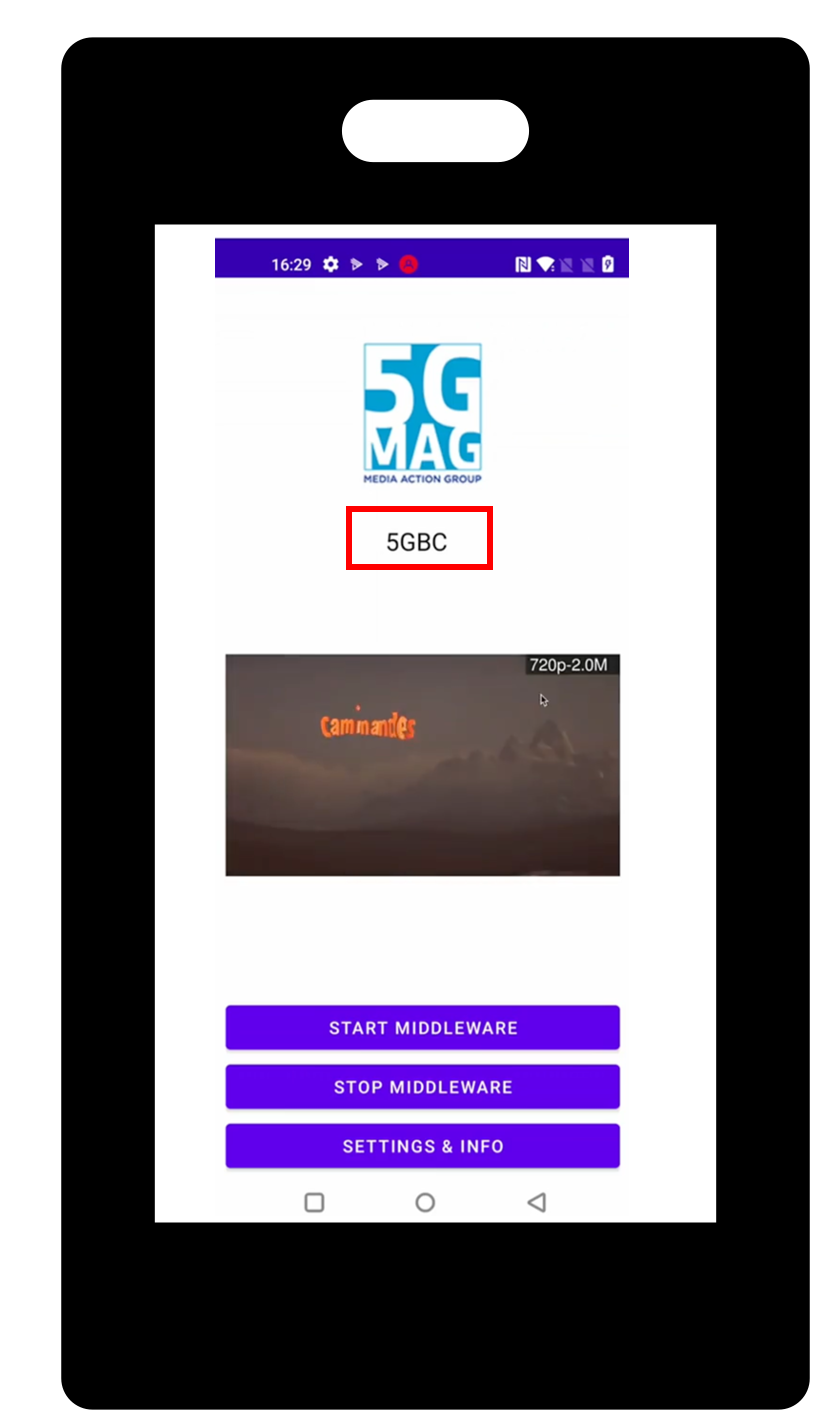
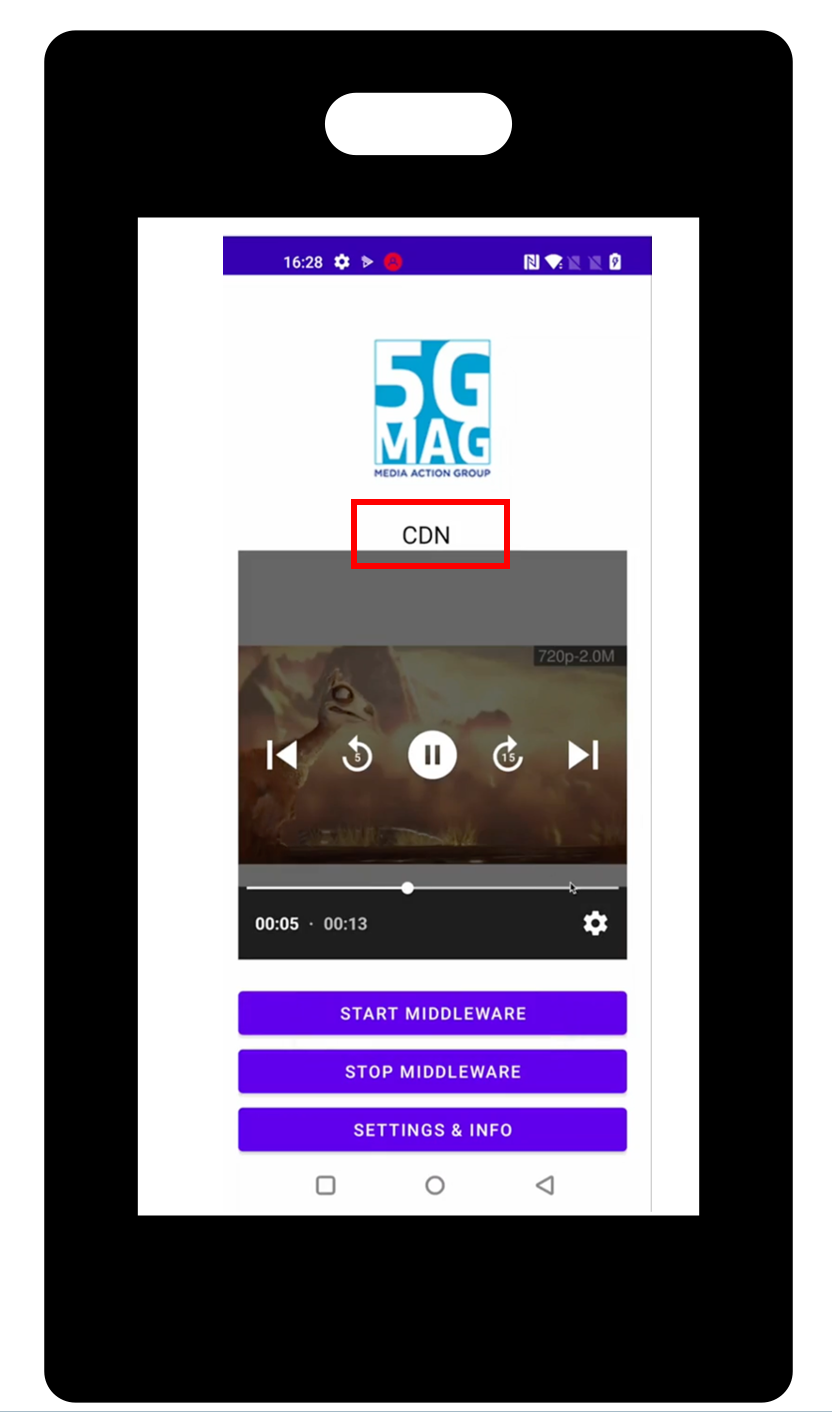
Same device, same stream — left: playing over 5G Broadcast (labelled 5GBC); right: after the broadcast signal drops, automatically switched to unicast (labelled CDN). Both from the real tutorial run.
The problem this solves
5G Broadcast delivers TV and radio to an unlimited number of devices over a free-to-air signal, at a fixed cost regardless of audience size — but only within coverage. Step outside the transmission area, or lose the signal for any reason, and a broadcast-only receiver simply stops. This showcase demonstrates the alternative: a receiver that treats broadcast as the primary path and unicast as an automatic, invisible fallback, so viewers keep watching either way.
Who this is for
Broadcasters and mobile network operators evaluating whether 5G Broadcast can be deployed without the usual "what happens at the edge of coverage" objection, and device or middleware vendors who need a concrete reference for building that same fallback behaviour into their own receivers.
How it works
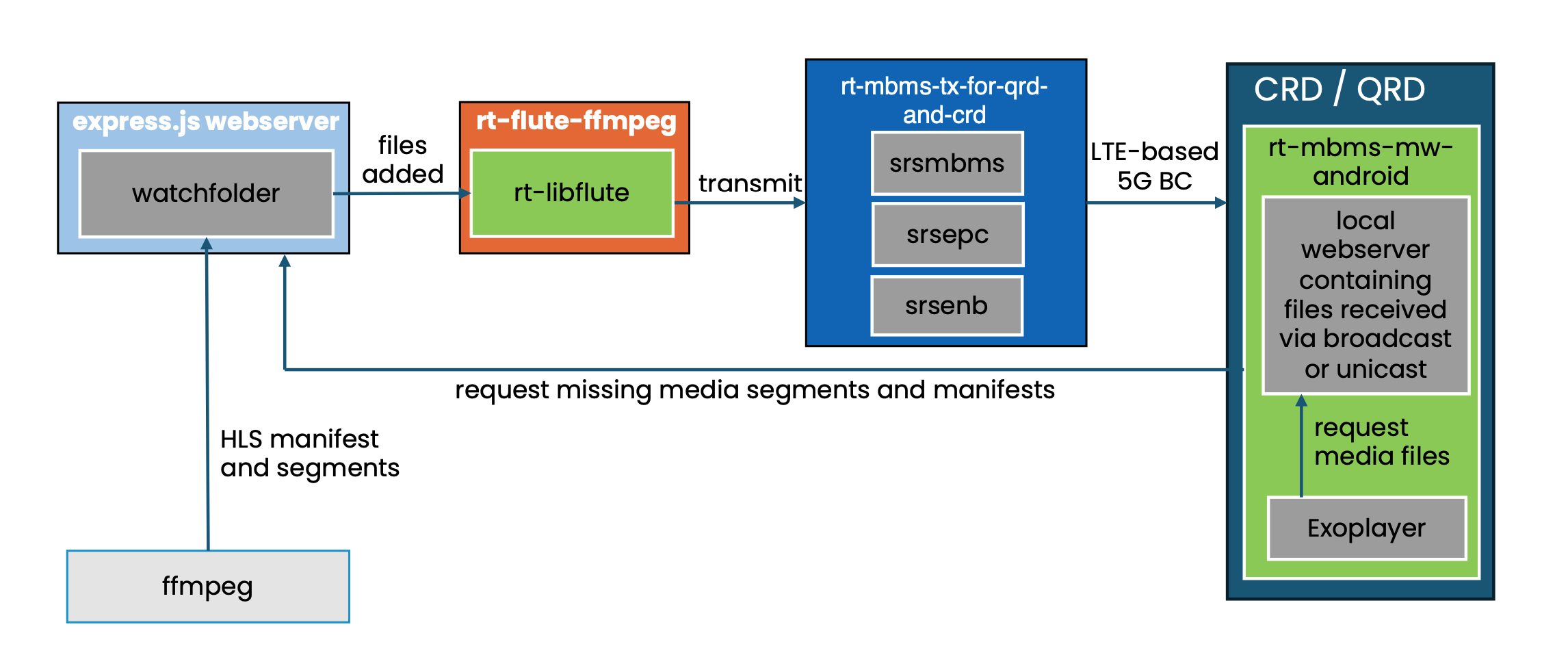
ffmpegturns a plain video file into an HLS stream, written to a watchfolder on a simple webserver — this is the same content also reachable directly over unicast (it's a normal CDN node).flute-ffmpeg(built on 5G-MAG'srt-libflute) watches that folder and FLUTE-encodes every new file as multicast traffic, handed off to the 5G Broadcast transmitter (rt-mbms-tx-for-qrd-and-crd, an srsRAN-based eNB/EPC/MBMS gateway stack).- The 5G-MAG Android Middleware (
rt-mbms-mw-android), running on a QRD or CRD receiver, receives those files over broadcast and exposes them to the device's own media player (Exoplayer) through a local webserver. - The player only ever talks to
localhost— it has no idea whether the file it just requested arrived over broadcast or unicast. - When the broadcast signal disappears, the Middleware detects this and starts fetching the same manifest and media files over unicast from the webserver in step 1 instead, still serving them to the player from that same local address. The switch is invisible to the player.
Built from: 5G Broadcast - TV and Radio Services.
Try it yourself
Follow the step-by-step tutorial to set up the transmitter, webserver and Android Middleware, and reproduce this switch yourself. It builds on the simpler SDR - HLS Playback over 5G Broadcast tutorial if you want the receiver-only setup first.
The screenshots above and the tutorial's own instructions are the only record of this working; no explicit "last verified against version X" statement exists in the source tutorial to repeat here, so none is claimed.
Related
- 5G Broadcast for TV, Radio and Emergency Alerts for the other 5G Broadcast application scenarios.
- Reference Tools for the individual specification implementations.